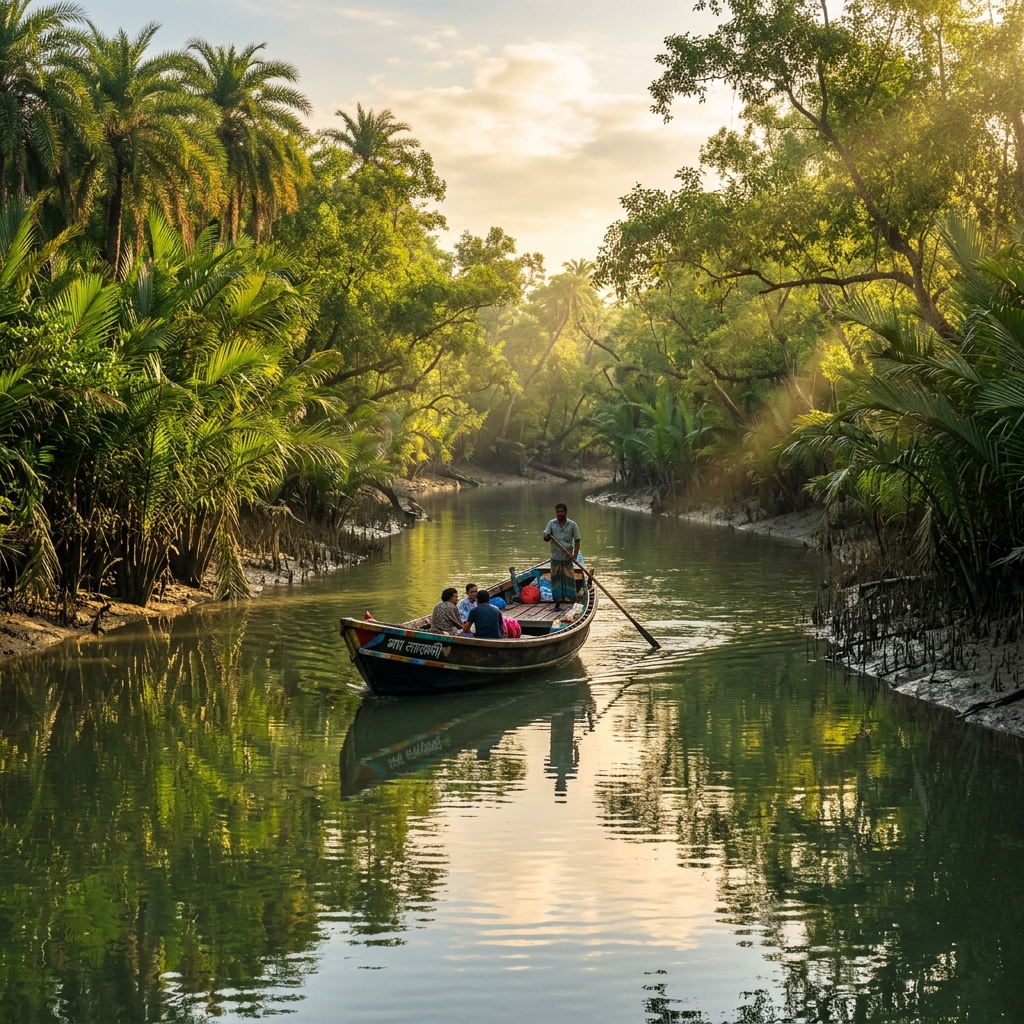
The Sundarbans
The largest mangrove forest on Earth
The Sundarbans is located in Khulna Division. A UNESCO World Heritage tidal forest of winding rivers and tangled roots — the last great refuge of the Royal Bengal Tiger. The optimal visiting season is December to February with a recommended stay of 3–4 days.
Overview
The Sundarbans is the largest contiguous mangrove forest in the world, a vast labyrinth of tidal waterways, mudflats and small islands straddling the border of Bangladesh and India. The Bangladeshi portion alone covers over 6,000 square kilometres and is protected as a UNESCO World Heritage Site.
It is most famous as the stronghold of the Royal Bengal Tiger, a population uniquely adapted to swimming between islands and hunting in tidal forest. But the tigers are only part of the story: spotted deer, wild boar, saltwater crocodiles, Irrawaddy and Ganges river dolphins, and more than 300 species of birds all share this ecosystem.
There are no roads here. The only way to experience the Sundarbans is by boat, drifting through channels where the forest presses in on both sides and the tide rules every movement. Watchtowers at Katka, Kochikhali, Harbaria and Hiron Point provide raised platforms to scan for wildlife and stretch your legs.
History & Culture
The name Sundarbans is usually translated as 'beautiful forest', and is often linked to the sundari tree (Heritiera fomes) that dominates the canopy. For centuries the forest has supported communities of fishermen, honey-collectors (mawalis) and woodcutters who enter on permits and pray to Bonbibi, the guardian spirit of the forest.
The Bangladesh Sundarbans was designated a UNESCO World Heritage Site in 1997 and includes three wildlife sanctuaries that form the core breeding areas for tigers, crocodiles and birds.
Top things to do in The Sundarbans
Take a live-aboard boat safari
The classic Sundarbans experience is a 2–4 day cruise on a wooden launch, sleeping on board and exploring narrow creeks by small boat at dawn and dusk when wildlife is most active.
Climb the watchtowers at Katka & Kochikhali
These towers overlook grasslands and waterholes where spotted deer, wild boar and — if you are very lucky — a tiger may appear.
Spot dolphins and crocodiles
Quiet channels are home to river dolphins, while saltwater crocodiles bask on the mudbanks at low tide.
Visit the Karamjal centre
An accessible day-trip spot near Mongla with boardwalks, a crocodile and deer breeding centre, and an introduction to mangrove ecology.
Walk Hiron Point (Nilkamal)
A UNESCO core-zone area known for tiger sightings, deer and a historic forest station near the river mouth.
Video Guide: Experience The Sundarbans
Watch cinematic 4K footage and essential visual travel highlights before planning your trip to The Sundarbans.
The Sundarbans in pictures


Photos via Wikimedia Commons under their respective Creative Commons licences. Click a photo credit for the source and full licence terms.
Highlights
- ✓Royal Bengal Tiger habitat
- ✓Multi-day boat cruises through tidal channels
- ✓Katka & Kochikhali wildlife watchtowers
- ✓River dolphins, crocodiles and spotted deer
- ✓Karamjal breeding & visitor centre
- ✓Sunset over the mangrove canopy
How to get to The Sundarbans
Most tours depart from Khulna city or the port town of Mongla. Reach Khulna from Dhaka by train, AC bus or a short domestic flight to Jessore, then continue by road.
Because the forest is roadless and requires permits, nearly all visitors travel on an organised multi-day boat tour that arranges transport, guides, forest fees and armed forest-department escorts.
Best time to visit The Sundarbans
The cool, dry winter from December to February is the prime season — comfortable temperatures, calmer water, and the best wildlife activity and visibility.
October–November and March are also good shoulder months. Avoid the monsoon (June–September), when heavy rain, rough water and leeches make travel difficult, and the hot pre-monsoon months of April–May.
Where to stay
The forest itself has no hotels — visitors sleep on the tour boat. Comfortable launches range from simple to near-luxury, with cabins, dining and a guide. Khulna and Mongla have hotels for the nights before and after the cruise.
What to eat
- 🍽️Fresh river and sea fish cooked on board
- 🍽️Bagerhat-region chui jhal (a fiery local pepper) dishes
- 🍽️Wild forest honey, collected by the mawalis
Travel tips
- 💡All visits require permits and an armed forest-department guard — book through a registered tour operator.
- 💡Never get off the boat except at designated points with your guide; tigers are present and unpredictable.
- 💡Carry binoculars, neutral-coloured clothing, insect repellent and a good camera with zoom.
- 💡Wildlife sightings, especially tigers, are never guaranteed — come for the whole ecosystem, not just one animal.
Nearby Attractions
A UNESCO World Heritage city of medieval mosques, including the famous Sixty Dome Mosque (Shat Gombuj Masjid), on the way from Khulna.
Bangladesh's second-largest seaport and the usual gateway town for Karamjal and short Sundarbans trips.
Frequently Asked Questions
What is special about the Sundarbans?+
The Sundarbans is the largest mangrove forest in the world and a UNESCO World Heritage Site. It is the only mangrove habitat of the Royal Bengal Tiger and shelters crocodiles, river dolphins, deer and over 300 bird species.
Can you see tigers in the Sundarbans?+
Royal Bengal Tigers live throughout the forest, but they are elusive swimmers in dense terrain, so sightings are rare and never guaranteed. Most visitors enjoy deer, crocodiles, dolphins, birds and the extraordinary landscape instead.
Do you need a permit to visit the Sundarbans?+
Yes. Entry requires forest-department permits and an armed guard, which are arranged for you when you book through a registered tour operator on an organised boat cruise.
How many days do you need for a Sundarbans trip?+
A typical live-aboard safari runs three to four days, allowing time to reach the core wildlife zones such as Katka, Kochikhali and Hiron Point. Short one-day trips to Karamjal near Mongla are also possible.
Related Destinations & Travel Guides
Explore 5 interlinked destinations in Khulna Division& surrounding regions

A UNESCO World Heritage city of 15th-century mosques and tombs, crowned by the extraordinary Sixty Dome Mosque built by the saint-general Khan Jahan Ali.

A remote island situated in the Sundarbans estuary, famous for its massive winter dry-fish processing camps and the vibrant Rash Mela festival.

A highly protected, remote wildlife sanctuary deep in the Sundarbans, known as one of the best locations for spotting tigers, deer, and rare birds.

The most accessible tourist spot in the Sundarbans, featuring a wooden boardwalk through the mangroves and a breeding center for endangered saltwater crocodiles.

A remote, breathtakingly wild beach located deep within the Sundarbans, famous for its roaming deer, tiger tracks, and untouched natural beauty.