
Bagerhat
The medieval mosque city
Bagerhat is located in Khulna Division. A UNESCO World Heritage city of 15th-century mosques and tombs, crowned by the extraordinary Sixty Dome Mosque built by the saint-general Khan Jahan Ali. The optimal visiting season is November to March with a recommended stay of 1 day.
Overview
Bagerhat, in the south of Khulna Division, holds one of Bangladesh's three UNESCO World Heritage Sites: the 'Historic Mosque City of Bagerhat'. Founded in the 15th century by the Muslim saint and general Khan Jahan Ali, the city once held hundreds of mosques and public buildings carved out of the mangrove-fringed delta.
Its centrepiece is the Sixty Dome Mosque (Shat Gombuj Masjid), a vast brick prayer hall whose roof is actually covered by seventy-seven domes, supported by a forest of slender stone pillars. It is the largest mosque of the sultanate period in Bangladesh and an architectural marvel of its age.
Scattered across the area are other monuments from the same era — the Nine Dome Mosque, Singair Mosque, Ronvijoypur Mosque with its huge single dome, and the tomb of Khan Jahan Ali beside a great tank said to hold crocodiles. Together they make Bagerhat an open-air museum of medieval Islamic architecture.
History & Culture
Khan Jahan Ali arrived in this part of the delta in the early 15th century, clearing forest, excavating tanks for fresh water, and building a city he called Khalifatabad. A revered figure, he combined the roles of administrator, military leader and Sufi saint.
After his death in 1459 the city gradually declined and much of it was reclaimed by forest, but its mosques survived. The site was inscribed as a UNESCO World Heritage Site in 1985 for its outstanding sultanate-era architecture.
Top things to do in Bagerhat
Explore the Sixty Dome Mosque
Step inside the cool, pillared prayer hall of the Shat Gombuj Masjid, the largest and most striking of Bagerhat's monuments and the reason for its World Heritage status.
Visit Khan Jahan Ali's tomb
Pay respects at the domed tomb of the city's founder beside the large Thakur Dighi tank, a place of pilgrimage said to be home to crocodiles.
Tour the smaller mosques
Seek out the Nine Dome Mosque, Singair Mosque and the single-domed Ronvijoypur Mosque, all within a short drive of each other.
See the site museum
The on-site museum displays artefacts and explains the history of Khan Jahan Ali and the medieval city of Khalifatabad.
Video Guide: Experience Bagerhat
Watch cinematic 4K footage and essential visual travel highlights before planning your trip to Bagerhat.
Bagerhat in pictures

Photos via Wikimedia Commons under their respective Creative Commons licences. Click a photo credit for the source and full licence terms.
Highlights
- ✓Sixty Dome Mosque (Shat Gombuj Masjid)
- ✓Tomb of Khan Jahan Ali
- ✓Nine Dome Mosque
- ✓Ronvijoypur & Singair mosques
- ✓The great Ghora Dighi tank
- ✓Sultanate-era brick and terracotta work
How to get to Bagerhat
Bagerhat is about 35 km southeast of Khulna city (around 1 hour by road). Reach Khulna from Dhaka by train, AC bus or a flight to nearby Jessore, then continue by road.
Bagerhat sits on the route between Khulna and Mongla, making it an easy and rewarding stop on the way to or from a Sundarbans cruise.
Best time to visit Bagerhat
The cool, dry winter from November to March is the most comfortable time to explore the open-air monuments on foot.
Avoid the hot, humid pre-monsoon months and the heavy rains of the monsoon, when sightseeing between the scattered mosques is less pleasant.
Where to stay
Most travellers base themselves in Khulna, which has the best range of hotels, and visit Bagerhat as a day trip, often combined with a Sundarbans tour. Simple accommodation is also available in Bagerhat town.
What to eat
- 🍽️Khulna-region chui jhal (a pungent local pepper) curries
- 🍽️Fresh river and pond fish
- 🍽️Local date-palm jaggery sweets in winter
Travel tips
- 💡Dress modestly, as the mosques are active places of worship.
- 💡Hire a local guide to bring the history of Khan Jahan Ali and the monuments to life.
- 💡Combine Bagerhat with a Sundarbans trip, since both lie south of Khulna.
- 💡Carry water and sun protection for walking between the scattered sites.
Nearby Attractions
The world's largest mangrove forest, reached via Khulna and Mongla just beyond Bagerhat.
The divisional city and main gateway, with hotels, transport links and riverside life.
Frequently Asked Questions
What is Bagerhat famous for?+
Bagerhat is famous as the UNESCO-listed 'Historic Mosque City', built in the 15th century by Khan Jahan Ali. Its centrepiece is the Sixty Dome Mosque, the largest sultanate-era mosque in Bangladesh.
Why is it called the Sixty Dome Mosque if it has more domes?+
The name Shat Gombuj ('sixty domes') is traditional; the mosque actually has seventy-seven domes supported by sixty stone pillars, which is one likely origin of the name.
How do you get to Bagerhat?+
Bagerhat is about 35 km (around 1 hour) southeast of Khulna city. Reach Khulna from Dhaka by train, bus or a flight to Jessore, then drive on. It also pairs well with a Sundarbans trip.
How long do you need in Bagerhat?+
A single day is enough to see the Sixty Dome Mosque, Khan Jahan Ali's tomb and the main smaller mosques, especially as a stop on the way to or from the Sundarbans.
Related Destinations & Travel Guides
Explore 5 interlinked destinations in Khulna Division& surrounding regions
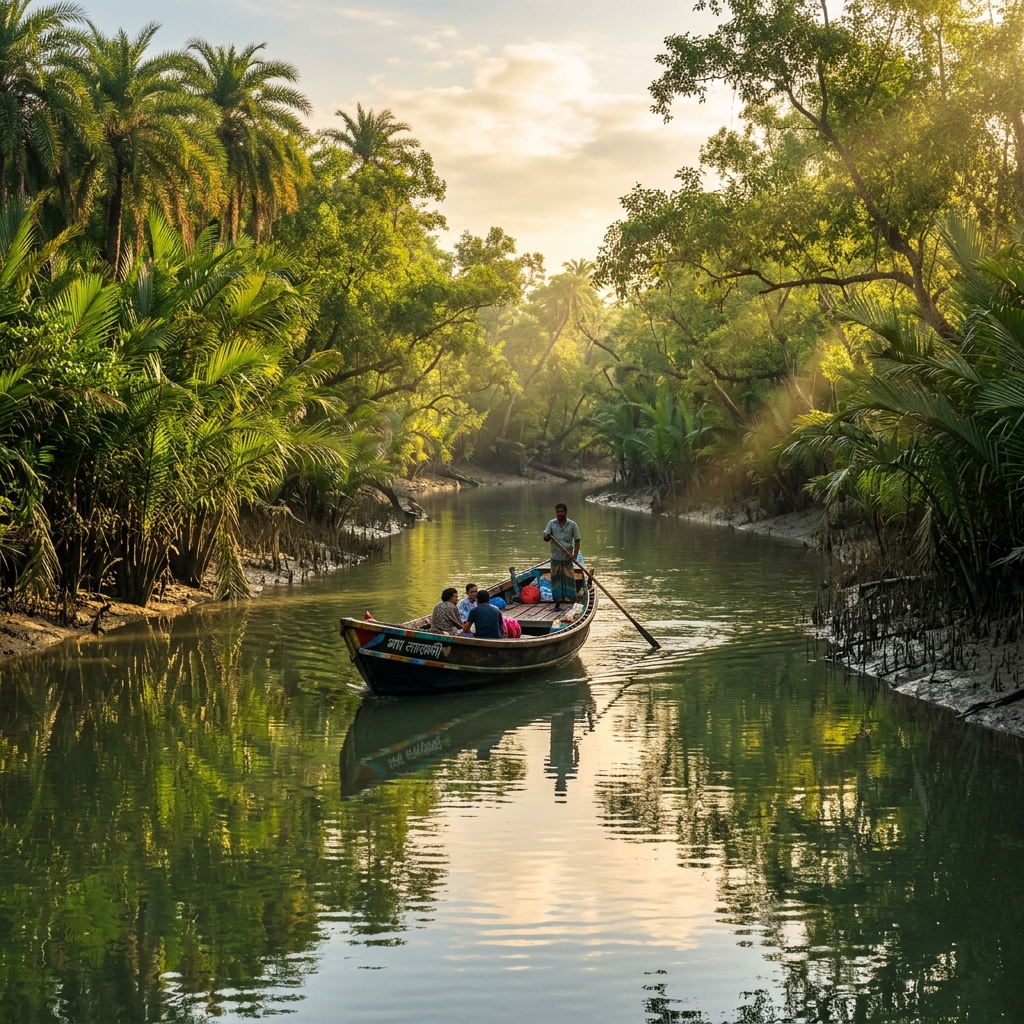
A UNESCO World Heritage tidal forest of winding rivers and tangled roots — the last great refuge of the Royal Bengal Tiger.

A remote island situated in the Sundarbans estuary, famous for its massive winter dry-fish processing camps and the vibrant Rash Mela festival.

A highly protected, remote wildlife sanctuary deep in the Sundarbans, known as one of the best locations for spotting tigers, deer, and rare birds.

The most accessible tourist spot in the Sundarbans, featuring a wooden boardwalk through the mangroves and a breeding center for endangered saltwater crocodiles.

A remote, breathtakingly wild beach located deep within the Sundarbans, famous for its roaming deer, tiger tracks, and untouched natural beauty.