Srimangal
The tea capital of Bangladesh
Srimangal is located in Sylhet Division. Endless rolling tea gardens, the famous seven-layer tea, and the Lawachara rainforest alive with the calls of Hoolock gibbons. The optimal visiting season is October to March with a recommended stay of 2 days.
Overview
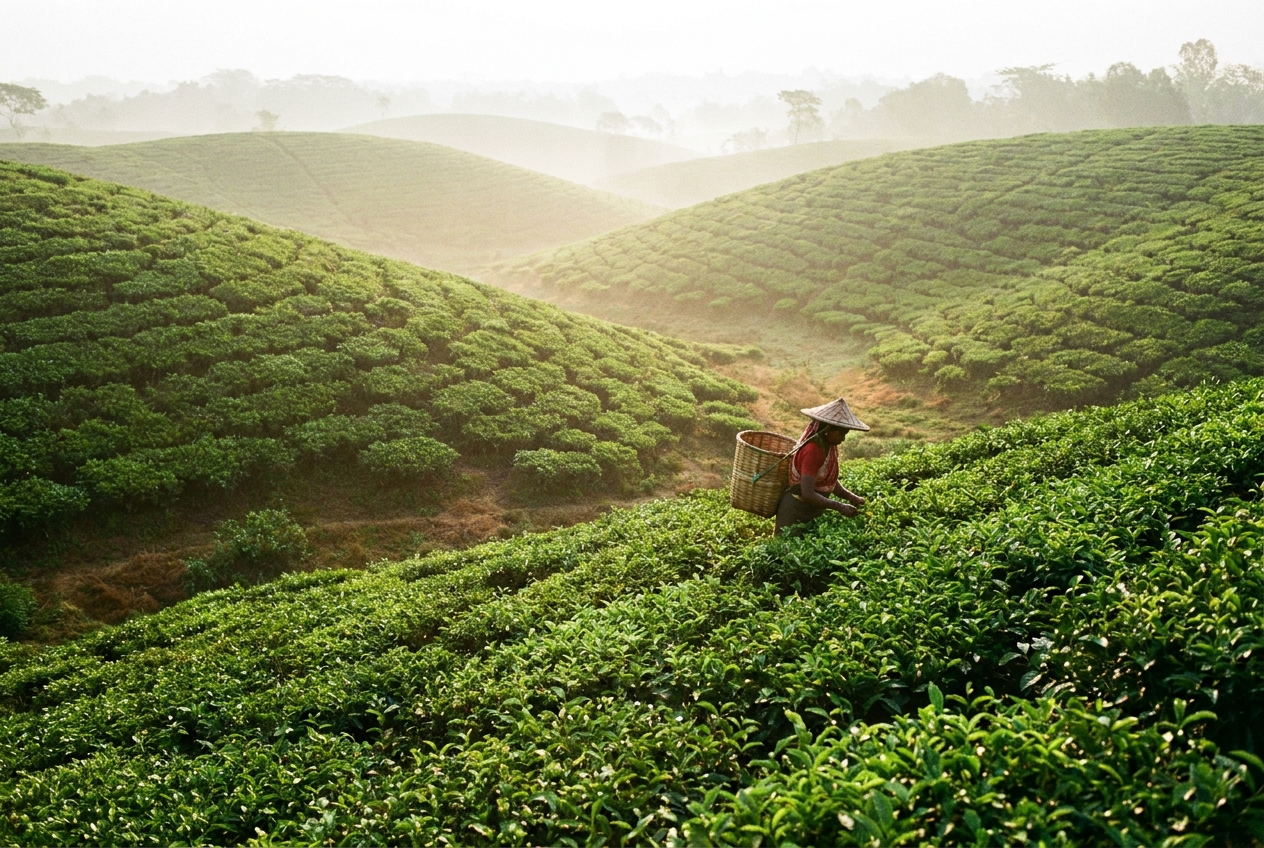
Srimangal (often spelled Sreemangal or Srimongol) is the tea capital of Bangladesh, where hillsides are carpeted with neat rows of emerald tea bushes stretching to the horizon. The morning mist rising off the gardens is one of the most photographed scenes in the country, and the area produces a large share of the nation's tea, making it a natural pairing with nearby Lawachara National Park.
The town is famous for its seven-layer tea, a clever drink in which teas and condiments of different densities are layered to form distinct bands in a single glass. Around the gardens lie pineapple and lemon plots, rubber plantations, and the villages of the Khasia and Manipuri communities who keep their distinctive traditions and weaving alive.
Just outside town is Lawachara National Park, a patch of semi-evergreen tropical rainforest where you might hear the whooping call of the endangered Hoolock gibbon, spot colourful birds, and walk shaded trails beneath a tall canopy.
History & Culture
Commercial tea cultivation in this region dates to the British colonial era of the 19th century, when the cool, wet hills of greater Sylhet proved ideal for plantations. Many of the estates still operating today were established in that period.
The Khasia (Khasi) and Manipuri peoples have long lived in and around these hills, the Khasia known for their betel-leaf cultivation and the Manipuri for their fine handloom weaving and classical dance.
Top things to do in Srimangal
Wander the tea gardens
Walk or cycle the paths between endless rows of tea bushes, especially in the early morning mist — the signature Srimongol tea garden experience, and wonderfully photogenic.
Taste the seven-layer tea
Visit one of the local tea cabins to try the famous layered tea, where each band has a different flavour, alongside other speciality brews.
Trek in Lawachara National Park
Take a guided walk through this rainforest to look for Hoolock gibbons, capped langurs, hornbills and a wealth of birdlife along shaded trails.
Relax at Madhabpur Lake
A peaceful lake surrounded by tea hills and lotus blooms, good for a quiet stroll and birdwatching.
Visit Khasia & Manipuri villages
See betel-leaf gardens, traditional homes and Manipuri handloom weaving, and learn about the region's indigenous cultures.
Birdwatch at Baikka Beel
This protected wetland near Hail Haor attracts large numbers of resident and migratory birds, especially in winter.
Video Guide: Experience Srimangal
Watch cinematic 4K footage and essential visual travel highlights before planning your trip to Srimangal.
Srimangal in pictures


Photos via Wikimedia Commons under their respective Creative Commons licences. Click a photo credit for the source and full licence terms.
Highlights
- ✓Rolling tea-garden landscapes
- ✓The famous seven-layer tea
- ✓Lawachara rainforest & Hoolock gibbons
- ✓Madhabpur Lake among the tea hills
- ✓Khasia & Manipuri village culture
- ✓Birdwatching and the Baikka Beel wetland
How to get to Srimangal
Srimangal sits on the Dhaka–Sylhet rail line. Comfortable intercity trains from Dhaka take roughly 6–7 hours, and the ride through the green countryside is scenic.
Buses run from Dhaka to Srimangal (about 5–6 hours) via the Dhaka–Sylhet highway. The town is also an easy 1–2 hour drive from Sylhet city.
Fly to Osmani International Airport in Sylhet (about 1 hour from Dhaka), then continue by road to Srimangal in roughly 1.5–2 hours.
Best time to visit Srimangal
The cool, dry winter from October to March is the most pleasant time, with comfortable weather, misty mornings over the gardens and peak birdwatching at the wetlands.
The tea gardens are at their greenest during and just after the monsoon (June–September), but heavy rain can make trails muddy. The hot months of April–May are best avoided.
Where to stay
Srimangal offers everything from heritage tea-estate bungalows and eco-resorts set among the gardens to comfortable mid-range hotels in town. Staying on or near an estate is the most atmospheric option.
What to eat
- 🍽️Seven-layer tea and fresh garden-grown tea
- 🍽️Local pineapple, lemon and honey
- 🍽️Manipuri and Khasia home-style dishes
Travel tips
- 💡Hire a local guide for Lawachara — they know where the gibbons and birds are and keep you on the right trails.
- 💡Mornings are best for both photography in the gardens and wildlife in the forest, so start early.
- 💡Ask permission before entering working tea estates or photographing workers and villagers.
- 💡Carry insect repellent and sturdy shoes for forest and wetland walks.
- 💡The quiet tea estates of Srimangal (Srimongol) are among the best places to stargaze on clear winter nights, offering dark skies free of city lights.
Nearby Attractions
A semi-evergreen rainforest just outside town, home to Hoolock gibbons and rich birdlife.
One of the largest waterfalls in Bangladesh, a popular trek from the tea belt.
The divisional city of shrines, rivers and yet more tea, an easy trip to the north.
Frequently Asked Questions
Why is Srimangal called the tea capital of Bangladesh?+
Srimangal is surrounded by some of the country's oldest and largest tea estates and produces a major share of Bangladesh's tea. Its rolling tea gardens and the famous seven-layer tea have made it synonymous with the industry.
What is seven-layer tea?+
Seven-layer tea is a Srimangal speciality in which teas and condiments of differing densities are carefully poured to form seven distinct, separately-flavoured bands within a single glass.
What is there to do in Srimangal besides tea?+
You can trek in Lawachara National Park to spot Hoolock gibbons and birds, relax at Madhabpur Lake, birdwatch at the Baikka Beel wetland, and visit Khasia and Manipuri villages.
How do I get to Srimangal from Dhaka?+
The most scenic option is the intercity train on the Dhaka–Sylhet line (about 6–7 hours). Buses also run from Dhaka in roughly 5–6 hours, and Srimangal is a short drive from Sylhet city.
Related Destinations & Travel Guides
Explore 5 interlinked destinations in Sylhet Division& surrounding regions

Lawachara National Park, eight kilometres north of Srimangal in Moulvibazar, is Bangladesh's most-visited nature reserve and a vital sanctuary for the endangered western Hoolock gibbon amid regenerated semi-evergreen rainforest.

Madhabkunda is one of Bangladesh's largest waterfalls, a 60-metre cascade plunging into a forested pool in the hills of Moulvibazar, near Sylhet.

A protected wetland sanctuary near Srimangal, renowned for its incredible diversity of water birds, lotus fields, and serene natural beauty.

A fascinating museum located in the ancestral home of Hason Raja, exploring the life, music, and philosophy of the legendary mystic poet.

A dense, biodiverse national park in Habiganj, renowned for its primate population, canopy walk, and vibrant birdlife.