
Puthia Temple Complex
Bangladesh's richest cluster of terracotta temples
Puthia Temple Complex is located in Rajshahi, Rajshahi Division. A serene estate town around a temple pond, holding the country's largest group of historic Hindu temples — terracotta Krishna panels, a towering stone Shiva temple and a Renaissance-style raja's palace. The optimal visiting season is October to March, for pleasant, dry weather. with a recommended stay of Half a day.
Overview
The Puthia Temple Complex, in Puthia upazila of Rajshahi district, holds the largest cluster of historic Hindu temples in Bangladesh. Set about 23 to 30 km east of Rajshahi city, just off the Dhaka-Rajshahi highway, it gathers a remarkable concentration of terracotta and stone monuments around a single estate town — an easy and rewarding stop in the country's north-west.
The temples were built by the Hindu zamindars, or rajas, of the Puthia Raj estate between roughly the 16th and 19th centuries. Many are in the region's distinctive terracotta style, their walls covered in moulded clay panels. The Govinda Temple is the finest of these, its surfaces alive with finely worked scenes from the life of Krishna.
Dominating the complex is the Bhubaneshwar Shiva Temple, a large stone pancha-ratna temple of five spires built in 1823 by Rani Bhubanmoyi Devi. Battered by the 1897 earthquake and the events of 1971, it remains an imposing sight. Around it stand the Gopala Temple, the small single-spired Jagannath temple, the Dol Mancha pavilion and several lesser shrines.
The monuments are arranged around the Shiv Sagar pond, with the grand Puthia Rajbari — an Indo-European Renaissance-style palace built in 1895 — facing the water. Protected by the Department of Archaeology and walkable within a couple of hours, the complex makes an ideal half-day trip from Rajshahi or a stop on the road to or from Dhaka.
History & Culture
The temples were built by the Hindu rajas of the Puthia Raj estate, one of the region's prominent zamindar families, between roughly the 16th and 19th centuries.
The Bhubaneshwar Shiva Temple was built in 1823 by Rani Bhubanmoyi Devi, and the Puthia Rajbari palace was completed in 1895 in an Indo-European Renaissance style.
The Shiva temple was damaged by the great earthquake of 1897 and again during the 1971 Liberation War, but the complex survives and is now protected by the Department of Archaeology.
Top things to do in Puthia Temple Complex
Admire the Govinda Temple terracotta
Study the moulded clay panels covering the Govinda Temple, depicting scenes from the life of Krishna — the finest terracotta work in the complex.
See the Shiva Temple
Take in the towering five-spired Bhubaneshwar Shiva Temple of 1823, the largest stone temple here, still impressive despite earthquake and war damage.
Walk around Shiv Sagar pond
Stroll the path around the Shiv Sagar pond, taking in the temples and the Rajbari reflected in the water.
View the Puthia Rajbari
Admire the facade of the 1895 Indo-European Renaissance-style palace of the Puthia rajas, which now houses a college.
Find the smaller shrines
Seek out the Gopala Temple, the small Jagannath temple and the Dol Mancha pavilion dotted around the complex.
Video Guide: Experience Puthia Temple Complex
Watch cinematic 4K footage and essential visual travel highlights before planning your trip to Puthia Temple Complex.
Puthia Temple Complex in pictures


Photos via Wikimedia Commons under their respective Creative Commons licences. Click a photo credit for the source and full licence terms.
Highlights
- ✓The terracotta Govinda Temple with its Krishna panels
- ✓The towering stone Bhubaneshwar Shiva Temple (1823)
- ✓The Gopala Temple and the single-spired Jagannath temple
- ✓The Dol Mancha festival pavilion
- ✓The Indo-European Puthia Rajbari palace (1895)
- ✓The Shiv Sagar pond at the heart of the complex
How to get to Puthia Temple Complex
Puthia is about 23-30 km east of Rajshahi city on the Dhaka-Rajshahi highway — roughly 45 minutes by bus, CNG auto-rickshaw or car.
It sits right on the Dhaka-Rajshahi road, making it an easy stop for traffic heading to or from the capital.
Rajshahi connects to Dhaka by air, by intercity trains such as the Padma, Dhumketu and Silkcity, and by road; from the city, continue to Puthia.
Best time to visit Puthia Temple Complex
October to March is cool and dry — the most comfortable time to walk the open complex.
April to June is hot, though it is also Rajshahi's celebrated mango season.
The monsoon (July to September) is green but can be wet underfoot around the pond.
Where to stay
Most visitors come on a day trip and stay in Rajshahi city, which has the full range of hotels; there is little accommodation at Puthia itself.
What to eat
- 🍽️Rajshahi's famous mangoes in summer
- 🍽️Local Bangladeshi rice-and-curry meals near the complex
- 🍽️Kalai roti, a regional flatbread of the north-west
- 🍽️Regional sweets in Rajshahi city
Travel tips
- 💡The monuments are within walking distance around the pond — allow a couple of hours.
- 💡A local guide can bring the terracotta stories and temple history to life.
- 💡Dress modestly at the shrines that are still in religious use.
- 💡Pair Puthia with a wider Rajshahi or northern heritage trip, including Mahasthangarh or Paharpur.
- 💡Visit in the morning for softer light on the terracotta and fewer crowds.
Nearby Attractions
Frequently Asked Questions
What is the Puthia Temple Complex?+
It is the largest cluster of historic Hindu temples in Bangladesh, in Puthia near Rajshahi — a group of terracotta and stone temples and a raja's palace built by the Puthia Raj estate between the 16th and 19th centuries, arranged around the Shiv Sagar pond.
Which are the main temples at Puthia?+
The highlights are the terracotta Govinda Temple, with its panels of Krishna legends, and the towering five-spired Bhubaneshwar Shiva Temple of 1823, along with the Gopala Temple, the small Jagannath temple and the Dol Mancha pavilion.
How do I get to Puthia?+
Puthia is about 23-30 km east of Rajshahi city on the Dhaka-Rajshahi highway, around 45 minutes by bus, CNG auto-rickshaw or car. It sits right on the highway, so it is an easy stop en route to or from Dhaka.
How long do you need at Puthia?+
About half a day. The monuments are within walking distance of each other around the Shiv Sagar pond, so a couple of hours is enough to see the main temples and the Rajbari.
Can Puthia be combined with other northern sites?+
Yes. It pairs well with Mahasthangarh, the ancient city near Bogura, and with the UNESCO-listed Paharpur monastery, on a wider heritage trip through northern Bangladesh.
Related Destinations & Travel Guides
Explore 5 interlinked destinations in Rajshahi, Rajshahi Division& surrounding regions

The vast 8th-century Somapura Mahavihara — once one of the largest Buddhist monasteries south of the Himalayas, and a UNESCO World Heritage Site.
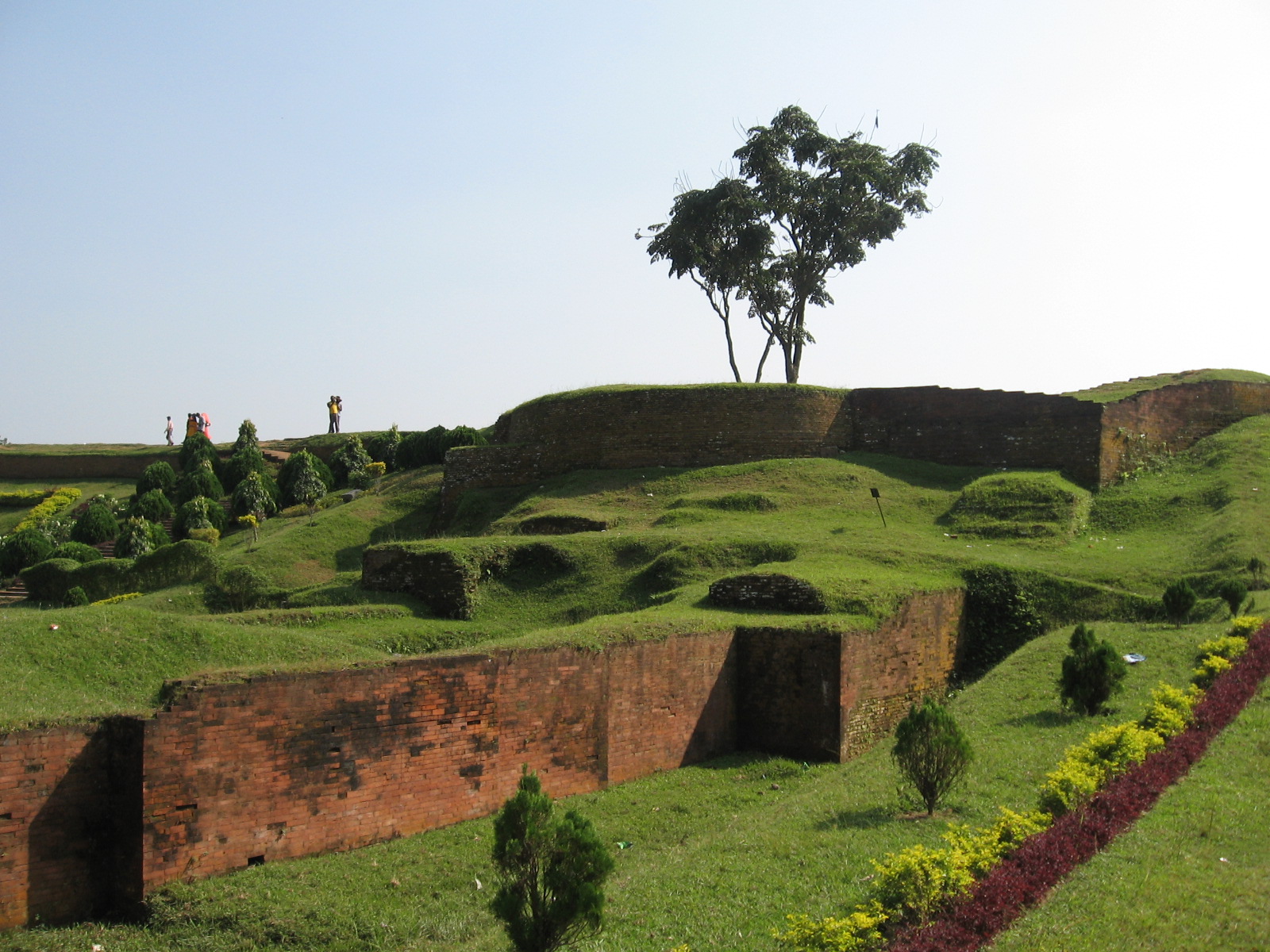
The earliest known urban site in Bangladesh — the ancient capital of Pundranagara, with high citadel ramparts, scattered temple and palace ruins and a museum of terracotta, coins and statuary.

Discover Bagha Mosque, a 16th-century terracotta-decorated mosque in western Rajshahi, built in 1523-24 CE during the Hussain Shahi dynasty, and a protected heritage gem.

Discover the Varendra Museum in Rajshahi, Bangladesh's oldest museum, housing 2,000 years of north Bengal heritage in a striking colonial-era red-brick building beside the Padma.

A UNESCO World Heritage city of 15th-century mosques and tombs, crowned by the extraordinary Sixty Dome Mosque built by the saint-general Khan Jahan Ali.