Mahasthangarh
Bangladesh's oldest city, walled in earth by the Karatoya
Mahasthangarh is located in Bogura (Bogra), Rajshahi Division. The earliest known urban site in Bangladesh — the ancient capital of Pundranagara, with high citadel ramparts, scattered temple and palace ruins and a museum of terracotta, coins and statuary. The optimal visiting season is October to March, for comfortable, dry weather. with a recommended stay of Half a day to a full day.
Overview
Mahasthangarh, in Shibganj of Bogura (Bogra) district, is the oldest known urban archaeological site in Bangladesh. Spread along the western bank of the once-mighty Karatoya River, about 13 km north of Bogura town, it preserves the remains of a city that has been inhabited for well over two thousand years.
The ancient city was Pundranagara, also called Pundravardhana, capital of the Pundra kingdom, with origins reaching back to at least the 3rd century BCE in the Mauryan period. A limestone slab found here, carved with a Brahmi-script inscription, ranks among the oldest written records ever discovered in the country — a tangible link to that distant age.
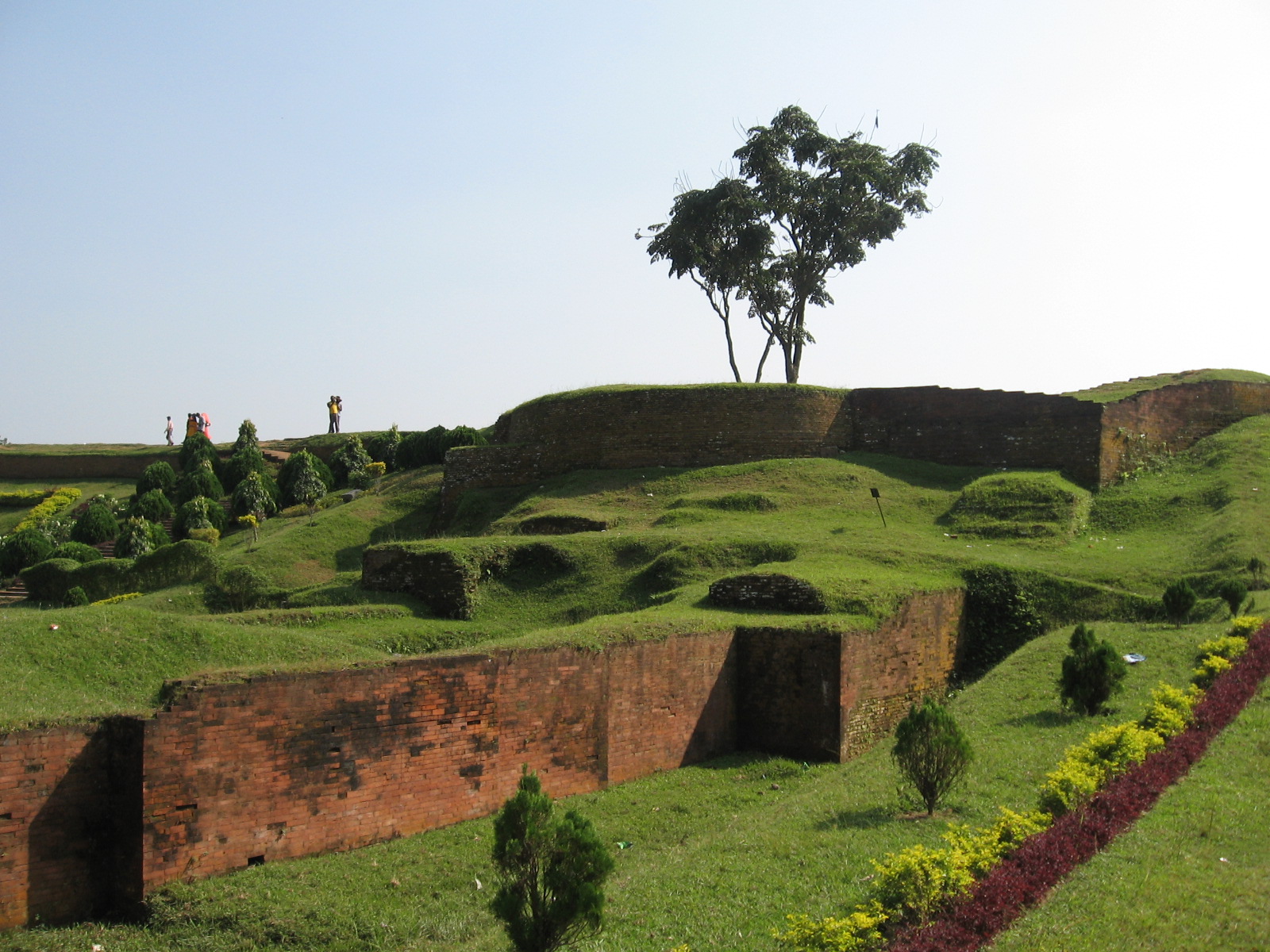
At its heart is the citadel: a large rectangular fortress enclosed by high earthen ramparts that still rise above the surrounding fields. Within and around them lie layers of history from the Mauryan, Gupta, Pala and Sena periods through to the Muslim era — the Govinda Bhita temple, the excavated ruins of Parshuram's Palace, the Jiyat Kunda well, and other scattered mounds.
The wider area rewards exploration too. Just outside the citadel stand the shrine of the saint Shah Sultan Balkhi Mahisawar, the Gokul Medh mound known in folklore as Behula's bridal chamber, and the Buddhist monastery ruin of Bhasu Bihara. The on-site Mahasthan Archaeological Museum gathers the finds — terracotta plaques, stone and bronze images, coins, pottery and ornaments — and is the best place to begin.
History & Culture
Mahasthangarh was the ancient city of Pundranagara (Pundravardhana), capital of the Pundra kingdom, with origins in at least the 3rd century BCE during the Mauryan period.
Successive dynasties — Mauryan, Gupta, Pala and Sena — and the later Muslim era each left their mark, building the layered citadel and its surrounding monuments over the centuries.
A limestone slab bearing a Brahmi inscription, discovered at the site, is one of the earliest written records found in Bangladesh and helped confirm the city's great antiquity.
Top things to do in Mahasthangarh
Start at the museum
Begin at the Mahasthan Archaeological Museum to see the terracotta plaques, statues, coins and pottery and to make sense of the spread-out ruins outside.
Walk the citadel ramparts
Climb and walk the high earthen ramparts of the ancient fortress for a sense of the scale of Pundranagara and views over the plain.
Explore Parshuram's Palace and Govinda Bhita
Wander the excavated foundations of Parshuram's Palace and the Govinda Bhita temple within and beside the citadel.
Visit the Gokul Medh mound
See the Gokul Medh (Lakshindar Medh), the terraced mound that folklore calls Behula's bridal chamber, a short ride from the citadel.
Pay respects at the dargah
Visit the shrine of Shah Sultan Balkhi Mahisawar, a focus of local pilgrimage near the site.
Video Guide: Experience Mahasthangarh
Watch cinematic 4K footage and essential visual travel highlights before planning your trip to Mahasthangarh.
Mahasthangarh in pictures


Photos via Wikimedia Commons under their respective Creative Commons licences. Click a photo credit for the source and full licence terms.
Highlights
- ✓The high earthen ramparts of the ancient citadel
- ✓Govinda Bhita temple ruins
- ✓The excavated ruins of Parshuram's Palace
- ✓The Gokul Medh mound ('Behula's bridal chamber')
- ✓The shrine of Shah Sultan Balkhi Mahisawar
- ✓The Mahasthan Archaeological Museum's terracotta, coins and statuary
How to get to Mahasthangarh
Mahasthangarh is about 13 km north of Bogura town — roughly 30-40 minutes by bus, CNG auto-rickshaw or car.
Bogura is around 4-5 hours from Dhaka on the northern highway, with frequent buses; continue from Bogura town to the site.
Trains serve Bogura and the wider northern region; from the town, take local transport to Mahasthangarh.
Best time to visit Mahasthangarh
October to March is cool and dry — the most comfortable time to walk the spread-out ruins.
April to June is hot, so visit early in the day if travelling in summer.
The monsoon (July to September) turns the grounds green but can leave the paths muddy.
Where to stay
Bogura town, about 13 km away, is the practical base and has a good range of hotels; most visitors make Mahasthangarh a day trip from there.
What to eat
- 🍽️Bogura's famous sweet yoghurt (mishti doi)
- 🍽️Local Bangladeshi rice-and-curry meals in Bogura town
- 🍽️Regional sweets and snacks
- 🍽️Seasonal fruit from roadside stalls
Travel tips
- 💡Start at the museum for context before exploring the ruins.
- 💡Wear comfortable shoes — the sites are spread out and involve walking.
- 💡Carry water and sun protection, as much of the site is open ground.
- 💡Consider combining the visit with Paharpur, the great Buddhist monastery to the west.
- 💡Hire a local guide to bring the layered history to life.
Nearby Attractions
Frequently Asked Questions
What is Mahasthangarh?+
Mahasthangarh is the oldest known urban archaeological site in Bangladesh, near Bogura. It was the ancient city of Pundranagara, capital of the Pundra kingdom, inhabited from at least the 3rd century BCE.
How old is Mahasthangarh?+
Its origins reach back to at least the 3rd century BCE, in the Mauryan period. A Brahmi-script inscription found here is one of the oldest written records in Bangladesh, confirming the city's great antiquity.
What can you see at Mahasthangarh?+
The high citadel ramparts, the Govinda Bhita temple and Parshuram's Palace ruins, the Gokul Medh mound, the shrine of Shah Sultan Balkhi Mahisawar, and the Mahasthan Archaeological Museum's collection of terracotta, coins and statuary.
How do I get to Mahasthangarh?+
It is about 13 km north of Bogura town, around 30-40 minutes by bus, CNG auto-rickshaw or car. Bogura itself is roughly 4-5 hours by road from Dhaka.
Can I combine Mahasthangarh with Paharpur?+
Yes. Paharpur, the great Buddhist monastery and a UNESCO World Heritage Site, lies further west, and the two ancient sites are often paired on a northern Bangladesh heritage trip.
Related Destinations & Travel Guides
Explore 5 interlinked destinations in Bogura (Bogra), Rajshahi Division& surrounding regions

The vast 8th-century Somapura Mahavihara — once one of the largest Buddhist monasteries south of the Himalayas, and a UNESCO World Heritage Site.

A serene estate town around a temple pond, holding the country's largest group of historic Hindu temples — terracotta Krishna panels, a towering stone Shiva temple and a Renaissance-style raja's palace.

A UNESCO World Heritage city of 15th-century mosques and tombs, crowned by the extraordinary Sixty Dome Mosque built by the saint-general Khan Jahan Ali.

The grand riverside palace of the Nawabs of Dhaka — a pink Indo-Saracenic landmark crowned by a great dome, now a museum recreating the life and times of the family that shaped the old city.

An incredibly peaceful, 18th-century church in the heart of Old Dhaka, standing as a testament to the once-thriving Armenian trading community.