Nijhum Dwip
Bangladesh's quiet island of deer, birds and shifting tides
Overview
Nijhum Dwip, whose name literally means 'quiet island', lies just off the southern coast of Hatiya upazila in Noakhali district, set within the western reaches of the Bay of Bengal. A small, car-free stretch of land surrounded by tidal channels, it offers one of the most unhurried escapes on the Bangladesh coast, where the only rhythms are those of the tide, the breeze and the call of shorebirds.
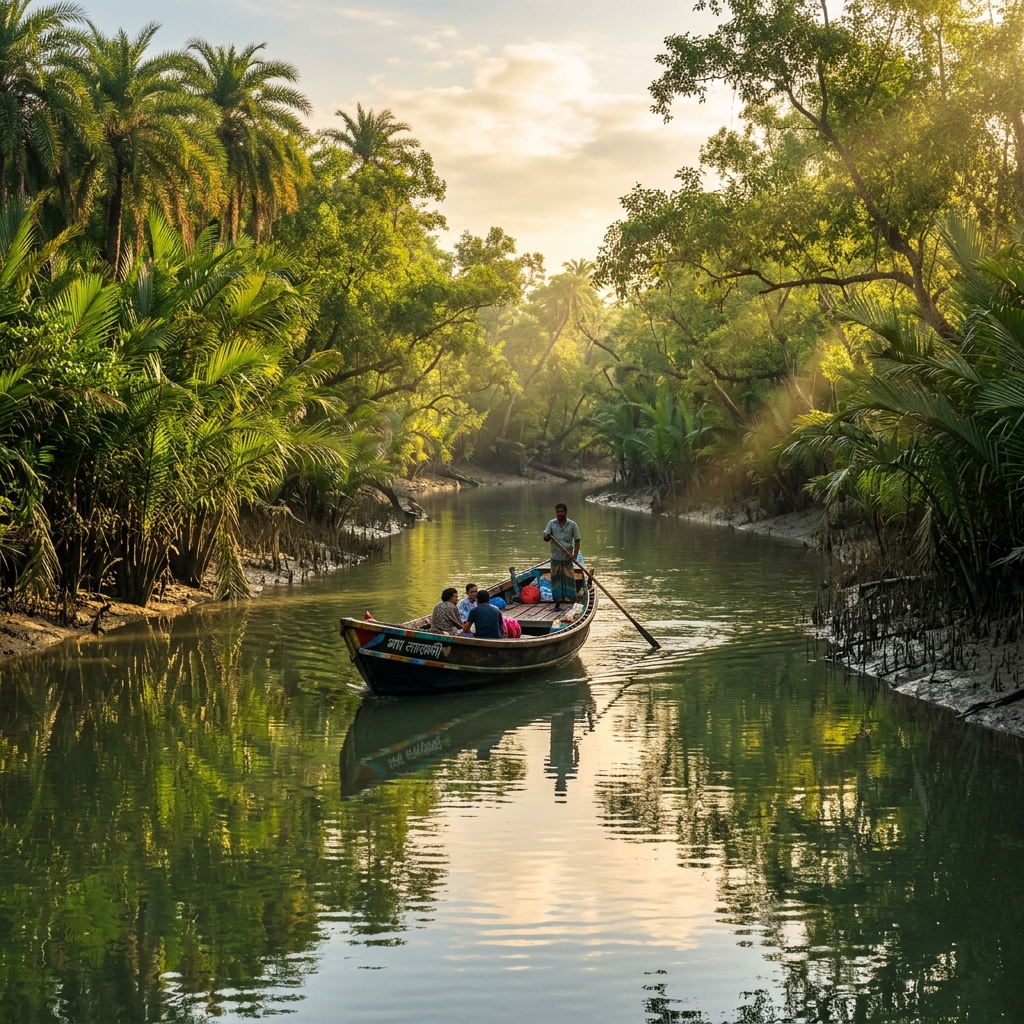
The island's defining features are a long sandy beach along its southern side, mangrove-fringed channels, and wide mudflats that draw a rich variety of waders, gulls, terns and migratory waterbirds each winter. Several watchtowers and a small visitor area allow travellers to take in the landscape without disturbing the wildlife, and the air of stillness is unlike anywhere else on the mainland.
Life here remains closely tied to the sea. Local communities earn their living from fishing and small-scale boat building, and visitors can watch traditional wooden boats being constructed on the shore. The combination of working fishing village, protected national park and quiet beaches makes Nijhum Dwip a destination that feels genuinely off the beaten path.
Because the island is so compact and undeveloped, a visit is usually combined with the wider Noakhali coast. Most travellers arrive on a day trip from Hatiya, while those who linger overnight are rewarded with wildlife sightings at dawn and dusk, when the spotted deer emerge and the birdlife is at its most active.
History & Culture
For generations Nijhum Dwip was a remote, lightly inhabited sand island used by local fishing communities, who built wooden boats on its shore and worked the rich waters of the western Bay of Bengal. Its remoteness and its mix of beach, mangrove and tidal flat remained largely unstudied until conservation planners began to take an interest in the late twentieth century.
In 2001 the island was formally declared Nijhum Dwip National Park, bringing its mangroves, beaches and tidal flats under official protection. As part of an earlier conservation programme in the 1990s, a small population of spotted deer, known locally as Chitra deer, was released on the island; they have since become a symbol of the park and one of its most cherished residents.
Top things to do in Nijhum Dwip
Watch for spotted deer at dawn and dusk
A small population of Chitra deer, introduced under a 1990s conservation programme, roams the island and is best seen in the early morning or late afternoon when they emerge to feed.
Walk the long southern beach
The south-facing sandy beach stretches for a considerable length and is ideal for slow walks, shell-hunting and quiet picnics well away from any road traffic.
Explore mangrove channels and watchtowers
Several watchtowers and a small visitor area overlook the mangrove-fringed channels and mudflats, offering excellent vantage points for waders, gulls and migratory waterbirds.
Observe traditional boat-building on the shore
Local communities still build wooden fishing boats by hand on the beach, giving visitors a rare chance to watch a craft that has changed little over generations.
Combine with the wider Noakhali coast
Most travellers pair a visit to Nijhum Dwip with a stop in Hatiya town and the broader Noakhali coast, making a short, varied trip out of the southern delta.
Nijhum Dwip in pictures


Photos via Wikimedia Commons under their respective Creative Commons licences. Click a photo credit for the source and full licence terms.
Highlights
- ✓Nijhum Dwip National Park, gazetted in 2001
- ✓Spotted (Chitra) deer roaming freely across the island
- ✓Long sandy beach on the south side of the island
- ✓Mangrove-fringed tidal channels and watchtowers
- ✓Winter birdlife including waders, gulls, terns and migratory waterbirds
- ✓Traditional wooden boat-building on the shore
How to get to Nijhum Dwip
Most visitors travel to Noakhali and continue by road to Hatiya, from where a small boat crosses to Nijhum Dwip; the boat leg typically takes one to two hours depending on the vessel and tide.
Launches run from Chandraganj on the Noakhali side of the mainland towards Hatiya, where travellers can arrange the onward boat transfer to the island.
It is also possible to reach the area via Sandwip Channel crossings from Chattogram, and to charter a boat directly from the main Noakhali coast for the trip out to Nijhum Dwip.
Best time to visit Nijhum Dwip
October to March is widely regarded as the best window, with cooler, drier days, calmer seas for the boat transfer and the arrival of migratory waders, gulls, terns and other waterbirds on the mudflats.
The months of April and May bring intense heat and high humidity, making the exposed beach and boat crossings uncomfortable, and wildlife harder to spot as birds disperse and deer shelter in deeper cover.
The monsoon season brings heavy rain, rough water and reduced boat services, so most organised trips pause during these months; planning around the cooler dry season is strongly advised.
Where to stay
Accommodation is very basic: a small rest-house on the island and simple guesthouses in Hatiya town. Many visitors come on a day trip from Hatiya or the Noakhali mainland and return the same evening.
What to eat
- 🍽️Freshly caught fish and seafood cooked by local hosts
- 🍽️Simple rice and dal meals at Hatiya guesthouses
- 🍽️Dry fish and small coastal snacks sold by fishing families
- 🍽️Tea at one of the small tea stalls near the jetty
Travel tips
- 💡Arrange the boat transfer from Hatiya in advance, especially in the cooler season
- 💡Bring sun protection, insect repellent and plenty of water as shade is limited
- 💡Spotting deer is best in the early morning or late afternoon
- 💡An overnight stay greatly improves chances of wildlife sightings at dawn and dusk
- 💡Combine the trip with Noakhali town and the broader Noakhali coast for a fuller visit
Nearby Attractions
Frequently Asked Questions
What is Nijhum Dwip famous for?+
Nijhum Dwip is best known as a small protected island in the Bay of Bengal, gazetted as Nijhum Dwip National Park in 2001. It is famous for its long sandy beach, mangrove channels, winter birdlife and a free-roaming population of spotted deer introduced in the 1990s.
How do I reach Nijhum Dwip from the mainland?+
Most visitors travel to Noakhali, continue by road to Hatiya and then take a small boat from the Hatiya jetty to the island, a crossing of one to two hours. Alternatives include launch services from Chandraganj, Sandwip Channel crossings from Chattogram, or a direct chartered boat from the Noakhali coast.
Is one day enough for Nijhum Dwip?+
A full day is the standard visit, covering the boat transfer and a walk on the island. However, an overnight stay is better, as wildlife, including the spotted deer, is most active at dawn and dusk.
When is the best time to visit Nijhum Dwip?+
October to March is the best time, with cooler weather, calmer seas and peak winter bird migration. April and May are extremely hot and humid, and the monsoon brings heavy rain and reduced boat services.
Where can I stay on or near Nijhum Dwip?+
Accommodation is very basic, with a small rest-house on the island and simple guesthouses in Hatiya town. Many visitors come on a day trip and return to the Noakhali mainland in the evening.