Debotakhum
A sacred forest stream of terraced cascades near Bandarban
Overview
Debotakhum is one of the most accessible and atmospheric nature stops near Bandarban town, in the Chittagong Hill Tracts. The name combines the Marma and Bengali words for 'deity' and 'water', and the stream is held sacred by the local communities, who still treat it as a place of quiet reverence rather than a major tourist site.
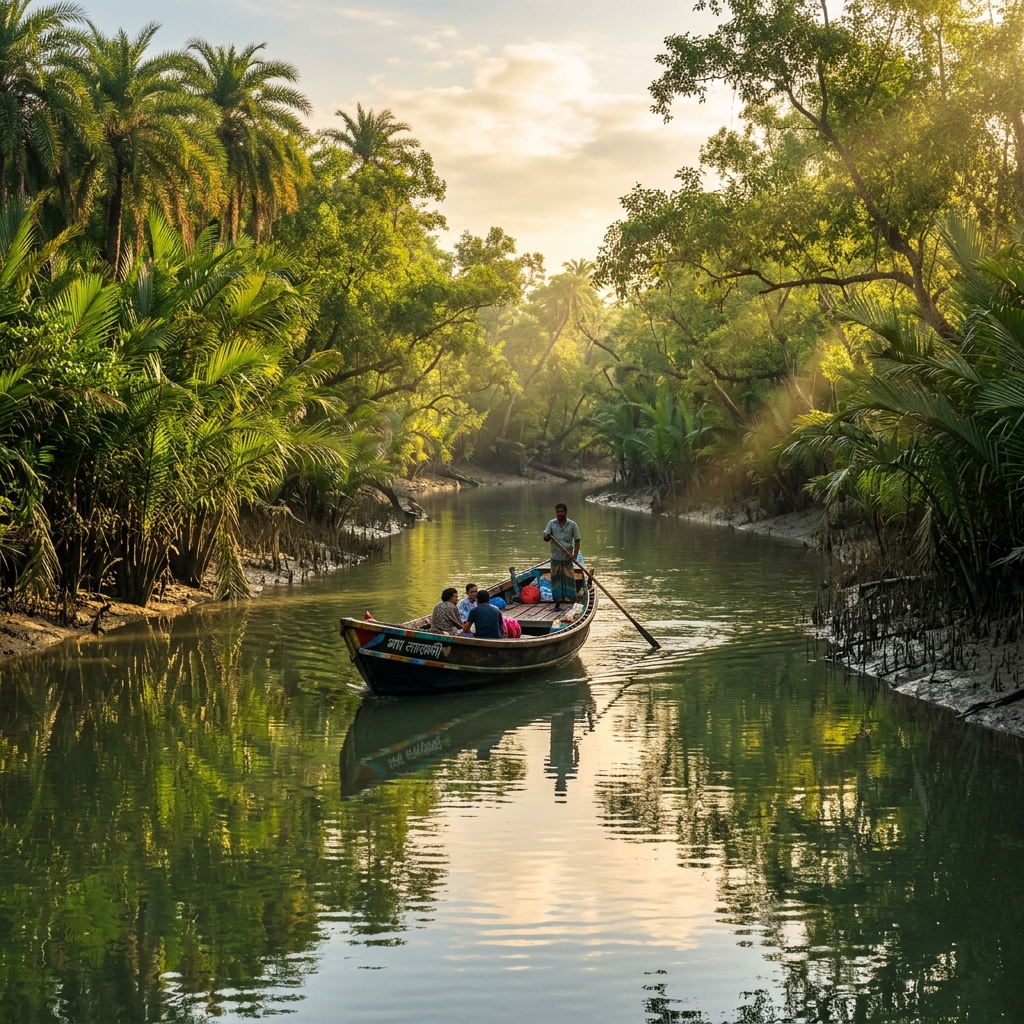
The stream flows through a narrow, forested valley in a series of small terraced cascades and pools, each one a different height and depth. The water is clear and cool, and the surrounding forest is mixed evergreen and deciduous, with hill birds and butterflies along the banks. The lower sections are wide enough for small flat-bottomed bamboo rafts to float downstream in the dry season, a quiet, almost meditative way to see the cascades.
The site is reached by a short forest walk from the trailhead, and the main cascades are an easy 30 to 60 minutes in from the road. There is no formal ticket or visitor centre; instead, a small set of tea stalls at the trailhead, a forest path shaded by trees, and the sound of running water are the typical arrival. The site is small but well-maintained by the local community.
Debotakhum is increasingly popular with day-trippers from Bandarban town and with trekkers moving between the major Hill Tracts destinations. It is a good choice for families and for those who want a quieter, less strenuous introduction to the hill-stream landscape of the area, with easy access and a gentle, scenic walk.
History & Culture
Debotakhum has long been a sacred stream in the local Marma and Bengali traditions, with the name itself reflecting the belief that the water is blessed. Communities living around the stream have traditionally used it for drinking and bathing, and have cared for the small pools and cascades as a community resource.
In recent years the site has been developed as a small eco-tourism stop on the way to other Hill Tracts destinations. A short forest trail and a few basic tea stalls have made it a popular, low-key day trip from Bandarban town, while leaving the sacred character of the place largely intact.
Top things to do in Debotakhum
Walk the forest trail
Follow the short forest trail from the trailhead to the main cascades, watching for hill birds and butterflies along the way. The walk is gentle and shaded.
Wade and swim in the lower pools
The lower cascades have small, calm pools that are safe to wade in during the dry season. Take a towel and a change of clothes if you want to cool off.
Try bamboo-rafting
In the dry season, flat-bottomed bamboo rafts are available at the lower pools for a slow, scenic ride downstream through the smaller cascades. Agree a price before you set off.
Photograph the cascades
The terraced pools and the green forest around them are best in soft morning light, when the water is calm and the trees are lit. Bring a camera and a waterproof bag for electronics.
Combine with a longer hill drive
Debotakhum is on the way to other Hill Tracts sites, including Nilgiri and Thanchi, and makes a peaceful first stop on a longer day trip from Bandarban town.
Debotakhum in pictures


Photos via Wikimedia Commons under their respective Creative Commons licences. Click a photo credit for the source and full licence terms.
Highlights
- ✓A series of small terraced waterfalls and pools along a forested stream
- ✓The clear, cool water and the sound of cascades in the green valley
- ✓Bamboo-rafting through the lower pools in the dry season
- ✓An easy 30-60 minute forest walk from the road, suitable for families
- ✓Sacred stream held in local Marma tradition
- ✓A peaceful, low-key alternative to the busier Hill Tracts attractions
How to get to Debotakhum
From Bandarban town, take a CNG or motorbike to the trailhead in about 1-2 hours. From there, walk 30-60 minutes through the forest to the main cascades.
From Dhaka, travel to Chattogram by air or train (5-7 hours), then continue by bus or private car to Bandarban town (3-4 hours). From Chattogram directly, allow 4-5 hours to Bandarban.
Debotakhum is a natural stop on a longer Hill Tracts day, especially combined with Nilgiri or other sites north of Bandarban. Local guides can combine the visits in a single day.
Best time to visit Debotakhum
October to March is the dry winter, with cool weather, firm trails and the calmest water in the pools. This is the best time for wading and bamboo-rafting, and the forest is at its most comfortable to walk in.
April to May is hot and humid. The water levels drop, the experience is less dramatic, and the heat can be uncomfortable in the unshaded sections of the trail. Mornings are still possible but less pleasant than the winter.
June to September is the monsoon. The stream swells and the cascades are most powerful, but the trail becomes muddy and slippery, and wading and bamboo-rafting are not safe. Best to skip during the heaviest rains.
Where to stay
Most visitors stay in Bandarban town, which has a range of hotels and guesthouses including the Hill Tracts resort options. There is no formal accommodation at the site, so day visits from town are the most common option.
What to eat
- 🍽️Local Marma bamboo-cooked dishes if you stop at a community kitchen
- 🍽️Fresh fruit and snacks at the trailhead tea stalls
- 🍽️Hill country chicken and rice dishes back in Bandarban town
- 🍽️Honey and local seasonal produce from the Hill Tracts
Travel tips
- 💡Wear shoes that grip on wet rocks; the lower pools can be slippery
- 💡Bring a change of clothes if you plan to wade or take a bamboo raft
- 💡Carry a waterproof bag for phone and camera
- 💡A local guide helps find the best spots and arrange the bamboo raft
- 💡Respect the sacred status of the stream: do not leave litter, avoid loud noise near the pools, and ask before photographing people and homes
Nearby Attractions
Frequently Asked Questions
What is Debotakhum?+
Debotakhum is a nature site near Bandarban, a series of small terraced waterfalls and pools along a forested stream that is sacred to the local Marma community. It is one of the easier day trips from Bandarban town.
Is it easy to reach Debotakhum?+
Yes. The trailhead is about 1-2 hours by CNG or motorbike from Bandarban town, and the main cascades are an easy 30 to 60 minute forest walk from the road. No special fitness is required for the standard visit.
Can I swim or wade in the pools?+
Yes, in the dry season (October to March) the lower pools are calm enough to wade in and to take a small bamboo raft downstream. In the monsoon the water is much stronger and wading is not safe.
How long should I spend at Debotakhum?+
A half day is enough to walk to the main cascades, wade in the lower pools and return to Bandarban. A full day is better if you want to take your time or combine the visit with another Hill Tracts site.
Is there an entry fee?+
There is no formal entry fee; a small tip to the bamboo-raft operator or to a local guide is appreciated. The site is free to walk in, but a guide helps with the best spots and the bamboo-rafting.