Padma Bridge
Bangladesh's longest bridge, a symbol of pride
Overview
The Padma Bridge, known locally as Padma Setu, stretches 6.15 km across the mighty Padma river, making it the longest bridge in Bangladesh. Linking Mawa in Munshiganj on the eastern bank with Jazira in Shariatpur on the west, it stands roughly 40 km south of Dhaka and has become a defining landmark of modern Bangladeshi engineering.
More than just a crossing, the bridge has transformed travel between the capital and the south-west. Journeys to Khulna, Barishal, Jessore and Mongla port are now hours shorter, and the historic ferry queues at Mawa ghat have become a memory for many travellers.
Built as a steel-truss composite structure, the bridge carries a four-lane highway alongside dedicated corridors for gas, telecoms and electricity, plus a pedestrian walkway. Approach viaducts and toll plazas frame each end, while a separate Padma Rail Bridge runs downstream in parallel.
The project was financed entirely by the Government of Bangladesh, a point of considerable national pride. At the Mawa end, a viewpoint and small park have been developed for visitors and photographers, making the bridge itself a rewarding stop rather than simply a route.
History & Culture
The Padma Bridge opened to road traffic on 25 June 2022, following a construction period of roughly seven years. Its completion marked one of the most significant infrastructure moments in the history of Bangladesh, celebrated as proof of national self-reliance.
Funded entirely by the Government of Bangladesh, the project stood apart from many comparable regional schemes that rely on external financing. The bridge's steel-truss composite design and 6.15 km multi-span structure were planned to serve road traffic, utilities and a downstream parallel railway, securing its place as a lasting symbol of engineering ambition.
Top things to do in Padma Bridge
Cross the bridge between Mawa and Jazira
Drive or ride across the 6.15 km span and enjoy sweeping views of the Padma river. Allow 30 minutes to an hour, including time in toll queues.
Visit the Mawa viewpoint and park
Stop at the dedicated viewpoint on the Mawa side for the best photographs of the bridge. It is especially atmospheric in the early morning or late afternoon.
Watch river life along the Padma
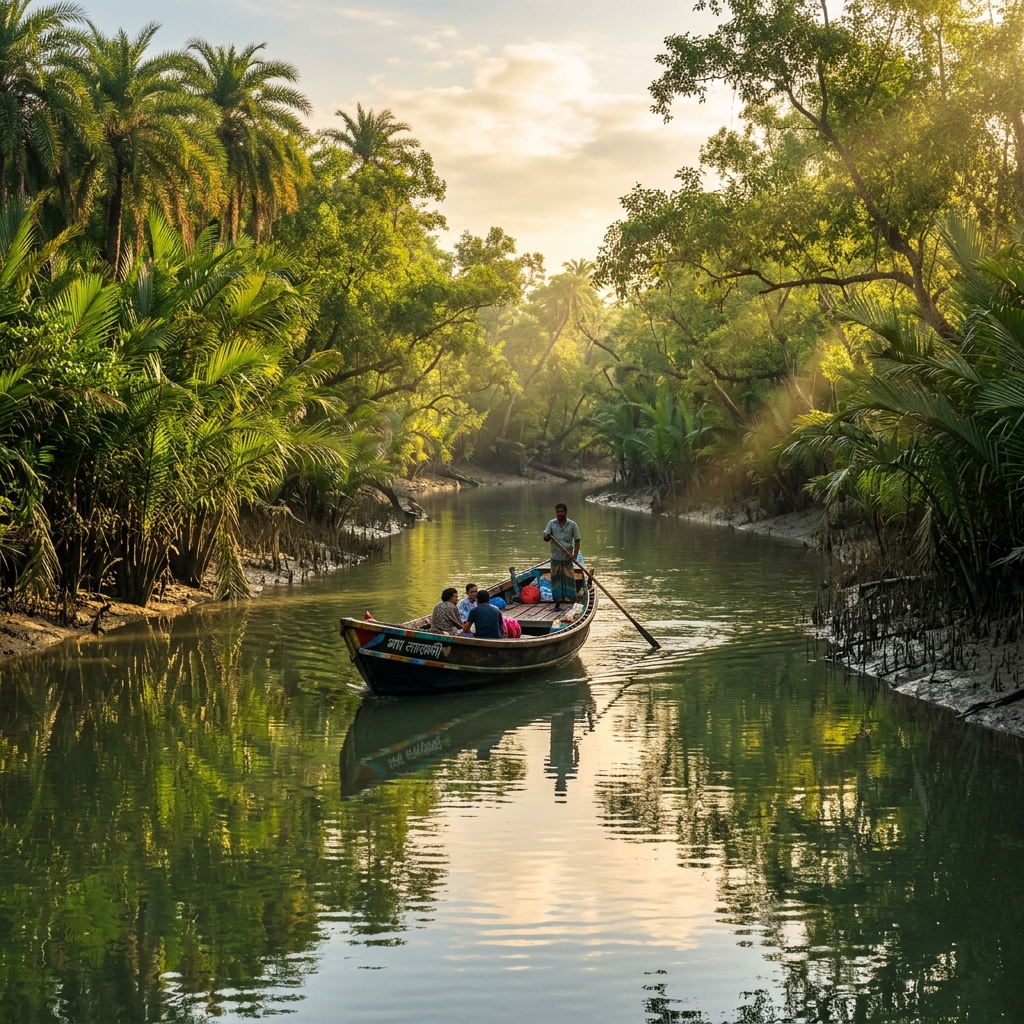
From the Mawa end you can still glimpse boats and activity on the Padma, a reminder of the ferry era that the bridge has replaced.
Continue south-west to Khulna or Barishal
Use the bridge as a springboard to the south-west, combining it with the historic mosque city of Bagerhat, the Sundarbans, or river-town Barishal.
See the parallel Padma Rail Bridge
Look out for the separate downstream Padma Rail Bridge, built alongside the road crossing as part of the wider transport corridor.
Padma Bridge in pictures


Photos via Wikimedia Commons under their respective Creative Commons licences. Click a photo credit for the source and full licence terms.
Highlights
- ✓Bangladesh's longest bridge at 6.15 km
- ✓Steel-truss composite multi-span design
- ✓Four-lane highway with utility corridors
- ✓Mawa viewpoint and riverside park
- ✓Parallel Padma Rail Bridge downstream
- ✓Gateway to the south-west: Khulna, Barishal, Sundarbans
How to get to Padma Bridge
Take the Dhaka-Bhanga highway (N8) for roughly 40 to 50 km south to Mawa. The route is well signposted to the Padma Bridge and approach viaducts.
Cars pay a flat toll, with higher rates for trucks and buses. Allow extra time at weekends, holidays and around Eid, when queues at the toll plazas can be heavy.
Travellers from Khulna, Barishal, Jessore or Mongla port approach via Jazira and Shariatpur, crossing the bridge eastbound into Munshiganj and on to Dhaka.
Best time to visit Padma Bridge
October to March is the most comfortable season, with cooler, drier weather and clearer skies over the Padma. Early mornings and late afternoons also give the best light for photography from the Mawa viewpoint.
Summer months from April to September are hot and humid, and the bridge deck can feel especially exposed around midday. If travelling in this period, plan crossings for early morning or evening and carry water.
Expect heavier traffic at weekends and on public holidays, and particularly at the start and end of Eid, when huge volumes of homeward and return traffic use the crossing. Travelling on weekdays outside these peaks gives a calmer experience.
Where to stay
There is no accommodation on the bridge itself; simple restaurants are available at the service areas, while full hotels can be found in Dhaka on the east side, or in Khulna, Barishal and beyond on the west.
What to eat
- 🍽️Tea and snacks at Mawa service-area restaurants
- 🍽️Fresh Padma-river fish dishes on either bank
- 🍽️Simple Bangladeshi rice and curry meals at roadside eateries
- 🍽️Sweets and local bakery treats in Munshiganj and Shariatpur towns
Travel tips
- 💡Keep your toll receipt safe, as it is required for the return journey
- 💡Avoid travelling at the busiest times around Eid if you can
- 💡Stop at the Mawa viewpoint for photographs, never on the bridge itself
- 💡Combine the crossing with Bagerhat, the Sundarbans or Barishal for a fuller trip
- 💡Carry water and sun protection, as the bridge is hot and exposed at midday
Nearby Attractions
Frequently Asked Questions
How long is the Padma Bridge?+
The Padma Bridge is 6.15 km long, making it the longest bridge in Bangladesh. It crosses the Padma river between Mawa and Jazira as a multi-span road bridge with approach viaducts.
When did the Padma Bridge open?+
The bridge opened to road traffic on 25 June 2022, after roughly seven years of construction. It was funded entirely by the Government of Bangladesh and is regarded as one of the country's most important infrastructure projects.
Where is the Padma Bridge and how do I get there from Dhaka?+
The bridge lies about 40 km south of Dhaka. From the capital, take the Dhaka-Bhanga highway (N8) for around 40 to 50 km to Mawa, then cross to Jazira in Shariatpur on the far side.
How much is the toll on the Padma Bridge?+
Tolls are set at a flat rate for cars, with higher charges for trucks and buses. Queues can be significant at weekends, on public holidays and around Eid travel periods.
Is it safe to stop on the Padma Bridge for photos?+
Stopping on the bridge for photographs is illegal and dangerous, so it should be avoided. Instead, use the viewpoint and small park at the Mawa end, which has been developed specifically for visitors and photographers.