Mainamati
Bangladesh's greatest Buddhist heritage, set among gentle eastern hills
Overview
Mainamati is an extensive archaeological site and museum complex set in the low, forested hills of the Lalmai range, a short distance north of Cumilla town in the Chattogram Division of eastern Bangladesh. It is the country's largest Buddhist archaeological site and one of the most important centres of Pala and early medieval Buddhist culture on the eastern side of the subcontinent, offering travellers a remarkably intact window into a vanished monastic world.
At the heart of the site stands Shalban Vihara, a large monastery complex with a central cruciform shrine ringed by smaller monk's cells, an assembly hall and a surrounding boundary wall. Beyond this signature monument, excavations have uncovered a string of further monasteries, including the New Shalban Vihara, Ananda Bhairabi, Rupban Mura and Itakhola Mura, all linked by broad walkways and clear signboards maintained by the Department of Archaeology.
The on-site Mainamati Archaeological Museum brings the ruins to life with a rich collection of bronze statues, stone and terracotta sculptures, coins, inscriptions, beads and metalwork recovered from the surrounding mounds. A standout piece is a notable seventh-century bronze Buddha image, while another surprising exhibit is a remarkable fossilised tree trunk unearthed during excavations, a quiet reminder of the deep geological time beneath the ancient foundations.
A visit to Mainamati can be comfortably combined with a stop at the nearby Maynamati War Cemetery, the World War II Commonwealth war graves in Cumilla, and a wander through Cumilla town itself. The protected site, the small visitor area and the easy access from the Dhaka-Chattogram highway make it an ideal cultural detour for travellers heading between the capital and Chattogram.
History & Culture
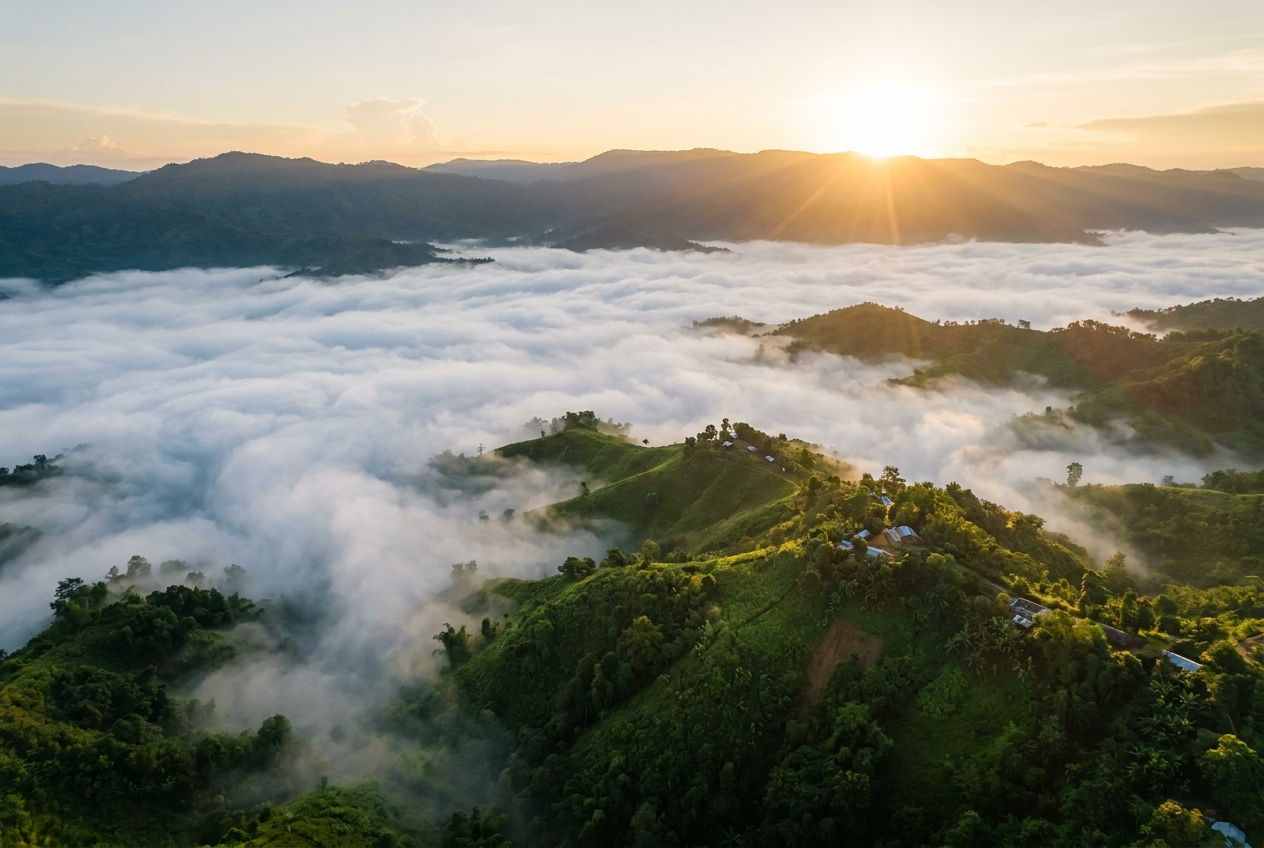
Mainamati rises from a broad low range of hills in the eastern plains of the Chattogram Division, where the landscape was once the heart of the ancient Buddhist kingdom of Samatata. Across these gently undulating ridges ran a chain of more than fifty monasteries and shrines, active between the seventh and thirteenth centuries CE, making it the largest Buddhist archaeological site in Bangladesh and a key centre of Pala and early medieval Buddhist culture on the eastern side of the subcontinent.
The most celebrated survivor of that era is Shalban Vihara, a large monastery complex built around a central cruciform shrine, surrounded by smaller monk's cells, an assembly hall and a boundary wall. The other excavated monasteries, including the New Shalban Vihara, the Ananda Bhairabi, the Rupban Mura and the Itakhola Mura, together with the bronzes, coins and inscriptions now displayed in the on-site museum, give visitors a coherent picture of monastic life, patronage and artistry in medieval Bengal.
Top things to do in Mainamati
Explore Shalban Vihara
Wander the largest and most impressive monastery on the site, with its central cruciform shrine, surrounding monk's cells, assembly hall and protective boundary wall. Allow time to read the on-site interpretation and picture the complex in its seventh-thirteenth century heyday.
Visit the Mainamati Archaeological Museum
Browse a rich collection of bronze statues, stone and terracotta sculptures, coins, inscriptions, beads and metalwork recovered from the site. Look out for the notable seventh-century bronze Buddha image and the unusual fossilised tree trunk uncovered during excavations.
Tour the smaller excavated monasteries
Walk out to the New Shalban Vihara, Ananda Bhairabi, Rupban Mura and Itakhola Mura monasteries. A local guide can help interpret the layout of the cells, shrines and assembly halls that once made up this chain of more than fifty monasteries.
Combine with the Maynamati War Cemetery
Pair your visit with the Maynamati War Cemetery in Cumilla, the World War II Commonwealth war graves. Together, the two sites offer a striking contrast between ancient South Asian Buddhism and twentieth-century military history.
Stroll the Lalmai-Mainamati hill range
Spend extra time walking the low ridges of the Lalmai range, where shaded paths connect the archaeological mounds. The gentle terrain makes it easy to enjoy a longer, quieter day among the ruins and surrounding countryside.
Mainamati in pictures


Photos via Wikimedia Commons under their respective Creative Commons licences. Click a photo credit for the source and full licence terms.
Highlights
- ✓Shalban Vihara, the central cruciform monastery complex
- ✓The chain of over 50 ancient monasteries and shrines across the Lalmai range
- ✓Mainamati Archaeological Museum and its seventh-century bronze Buddha
- ✓Fossilised tree trunk displayed in the on-site museum
- ✓Excavated monasteries of New Shalban Vihara, Ananda Bhairabi, Rupban Mura and Itakhola Mura
- ✓Scenic low-hill setting within the Lalmai-Mainamati range
How to get to Mainamati
Cumilla is roughly two to three hours from Dhaka by road on the Dhaka-Chattogram highway. From there, Mainamati lies only about eight to twelve kilometres north of Cumilla town and is most easily reached by CNG auto-rickshaw or car.
Travellers heading north from Chattogram can reach Cumilla directly along the Dhaka-Chattogram highway, then continue a short distance to the site. The same onward journey to Mainamati applies, by CNG or hired car from Cumilla town.
Once in Cumilla, CNG auto-rickshaws and hired cars are the simplest way to reach the site, and arranging a local guide at the entrance is a good idea to help interpret the monastery remains.
Best time to visit Mainamati
October to March brings the cool, dry season to eastern Bangladesh, with mild temperatures and clear skies that are ideal for exploring the open-air monasteries and walking the Lalmai range in comfort.
The warmer months from April into early summer can be hot and humid, and the main monsoon months bring heavy downpours that make the unpaved paths between mounds slippery and the site less photogenic.
The Mainamati Archaeological Museum is open on most days, with a regular weekly closing day, so it is worth checking timings in advance, especially if you are visiting during a public holiday period.
Where to stay
A handful of simple restaurants sit close to the site, while full accommodation options, from budget guesthouses to mid-range hotels, are available in Cumilla town a short drive away.
What to eat
- 🍽️Simple rice and fish curries at roadside eateries near the site
- 🍽️Comilla's famous rosomalai and other traditional Bengali sweets
- 🍽️Local-style biryani and tehari from restaurants in Cumilla town
- 🍽️Fresh tea and snacks from small tea stalls along the highway
Travel tips
- 💡Carry water, sun protection and comfortable shoes for walking the open-air ruins.
- 💡Hire a local guide to make sense of the monastery layouts and sculptures.
- 💡Combine the visit with the Maynamati War Cemetery in Cumilla for a fuller day.
- 💡Plan a half day for the museum and main sites, or a full day to explore more of the Lalmai range.
- 💡Check the museum's weekly closing day before setting out from Dhaka or Chattogram.
Nearby Attractions
Frequently Asked Questions
Where is Mainamati located?+
Mainamati lies in the eastern plains of the Chattogram Division, near Cumilla (Comilla) town. It is part of the Lalmai-Mainamati low hill range and is one of the most important archaeological landscapes in Bangladesh.
Why is Mainamati historically important?+
It is the largest Buddhist archaeological site in Bangladesh, the heart of the ancient Samatata kingdom, and one of the most important centres of Pala and early medieval Buddhist culture on the eastern side of the subcontinent, with over fifty monasteries and shrines active between the seventh and thirteenth centuries CE.
What are the main monuments to see at Mainamati?+
The signature monument is Shalban Vihara, with its central cruciform shrine, monk's cells, assembly hall and boundary wall. Other excavated monasteries include the New Shalban Vihara, Ananda Bhairabi, Rupban Mura and Itakhola Mura.
How do I get to Mainamati from Dhaka?+
Cumilla is around two to three hours from Dhaka by road on the Dhaka-Chattogram highway. From Cumilla town, the site is only about eight to twelve kilometres north and is most easily reached by CNG auto-rickshaw or car.
How long should I spend at Mainamati?+
Allow at least half a day for the main museum and the principal monastery sites, or a full day if you want to walk further across the Lalmai range and pair the visit with the Maynamati War Cemetery in Cumilla.